

Everything You Need to Know About the Automotive Engine Oil Cooler
Release time: 2025-12-12
The engine is the heart of the car, and the engine oil is the “blood” that keeps this heart running smoothly. With continuous increases in engine power and increasingly demanding operating conditions, engine oil must not only lubricate and clean but also take on the crucial task of heat dissipation. When the engine operates under high load or for extended periods, the oil temperature can rise sharply—this is the critical moment when the Oil Cooler comes into play.
What is an Engine Oil Cooler?
An engine oil cooler is a device specifically designed to reduce the temperature of the engine oil. It ensures the oil temperature remains within the optimal operating range (typically between 90°C and 120°C by transferring the heat from the engine’s lubricating oil to another cooling medium (usually coolant or air).
Why is Oil Cooling Necessary?
Excessive heat can cause damage to both the engine oil and the engine itself:
- Oil Performance Degradation: High temperatures decrease oil viscosity, weakening lubrication capabilities, leading to oil film breakdown, and increasing mechanical wear.
- Accelerated Oxidation and Deterioration: High heat accelerates oil oxidation, forming sludge and carbon deposits, which shortens the lifespan of the oil.
- Seal Damage: Prolonged high temperatures can cause internal rubber seals and gaskets within the engine to harden and fail, leading to oil leaks.
- Engine Overheating: Insufficient oil cooling exacerbates the overall thermal load on the engine.
Main Types of Engine Oil Coolers
Based on the cooling medium used, oil coolers are primarily categorized into two types:
1. Water-Cooled Type (Water/Oil Heat Exchanger)
- Working Principle: Utilizes the engine coolant from the vehicle’s cooling system to cool the oil. The oil and coolant flow in parallel channels inside the heat exchanger, exchanging heat through metal walls.
- Structural Features: Typically utilizes a Plate Type or Tube Type structure. They are relatively compact and are often integrated near the engine block or the oil filter base.
- Advantages: High cooling efficiency, and more importantly, the ability to quickly bring the oil up to the optimal operating temperature (as the coolant heats up faster). It can also use residual coolant heat to preheat the oil during cold starts.
- Application: Most widely used in modern passenger cars and light commercial vehicles.
2. Air-Cooled Type (Air/Oil Heat Exchanger)
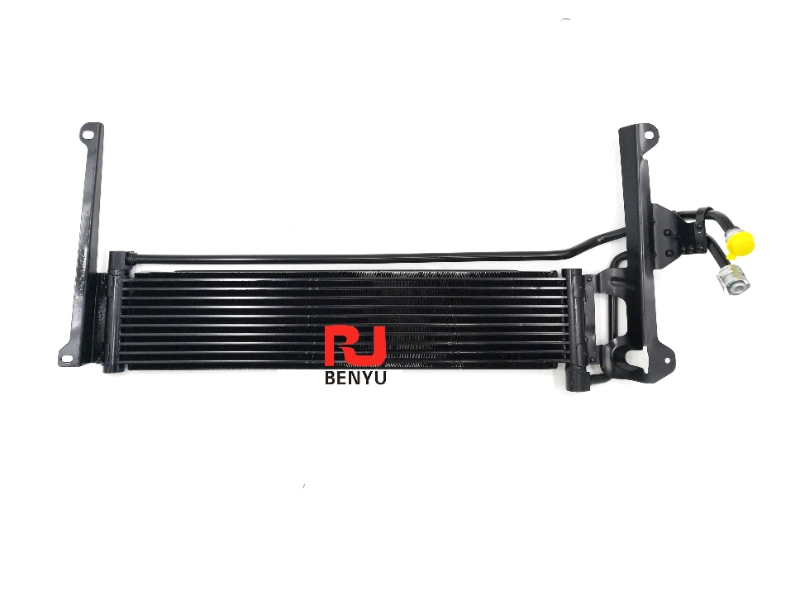
- Working Principle: Uses oncoming air to cool the oil. Structurally, it resembles a small automotive radiator.
- Structural Features: Usually consists of multiple layers of fins and tubes, mounted at the front of the vehicle, such as behind the bumper or in front of the main radiator.
- Advantages: Simple structure, strong cooling capacity, making it particularly suitable for heavy-duty, high-performance, or modified vehicles, and applications requiring extreme heat dissipation.
- Application: Commonly found in high-performance sports cars, turbocharged models, off-road vehicles, and heavy-duty trucks.
Core Components and Operation
A complete oil cooling system typically includes the following core components:
- The Cooler Body: The main unit where heat exchange takes place.
- Oil Filter Adapter/Base: Used to integrate the cooler into the lubrication circuit.
- Thermostatic Bypass Valve: This is a crucial component.
- Function: When the engine is first started or the oil temperature is low, the bypass valve opens, allowing the oil to bypass the cooler and flow directly back to the engine, allowing the oil to quickly reach the optimal operating temperature.
- Activation Point: The bypass valve only closes, forcing the oil to flow through the cooler for cooling, when the oil temperature exceeds a preset value (e.g., 95°C).
Maintenance and Troubleshooting
As a supplier, you need to emphasize the importance of maintenance to your customers:
- Regular Seal Inspection: If a leak occurs inside a water-cooled cooler, it can lead to “oil and water mixing,” causing catastrophic engine damage. Regular inspection of the seals and gaskets on the cooler body and its connections is vital.
- Keep Clean: The external fins of air-cooled coolers must be kept clean to prevent blockage by dirt, insects, or debris, which severely impairs cooling efficiency.
- Replace Damaged Components: Any signs of cracks or deformation in the cooler body (often caused by impact or high-pressure surge) must lead to immediate replacement.
Conclusion
In modern vehicle design, the engine oil cooler has become a key component for engine reliability and performance. It not only protects the valuable engine oil but is also the “unsung hero” that ensures the engine can continuously deliver power under high loads.
As a professional engine oil cooler supplier, Benwoo are committed to providing high-quality, high-efficiency engine oil cooler products, ensuring your engine always operates within the optimal temperature range for long-lasting and reliable power delivery.
BENWOO offer oil coolers suitable for a wide range of vehicle types. By increasing the heat transfer area to improve heat transfer efficiency, we can maintain a stable outlet oil temperature over a wide temperature range and offer excellent resistance to sudden temperature changes and vibration. We also offer customized services to meet individual needs.
Contact us now to find the best oil cooling solution for your vehicle models!